About Waking Life
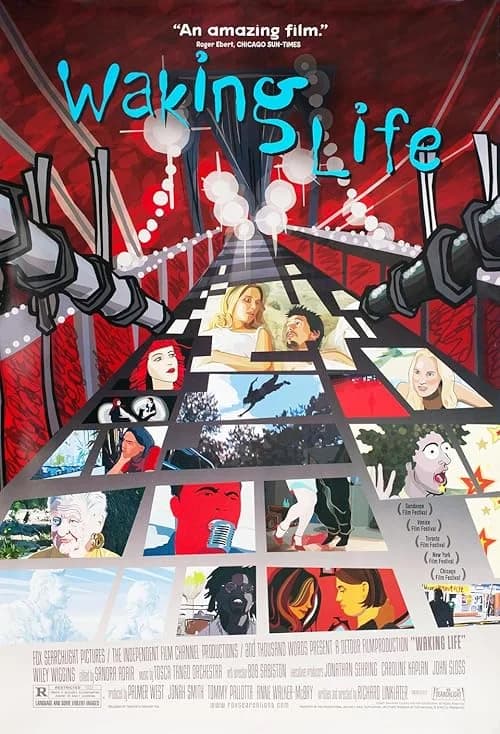
Richard Linklater's groundbreaking 2001 film Waking Life presents a unique cinematic experience that blends rotoscope animation with profound philosophical inquiry. The film follows an unnamed protagonist who finds himself trapped in a recurring dream state, wandering through a series of encounters with various characters who engage him in conversations about consciousness, free will, existentialism, and the nature of reality itself.
The film's visual style, created through digital rotoscoping over live-action footage, creates a constantly shifting, dreamlike aesthetic that perfectly complements its thematic concerns. This animation technique gives the film a fluid, painterly quality that makes the philosophical discussions feel organic to the dream landscape. Ethan Hawke and Julie Delpy reprise their Before Sunrise roles in one memorable segment, while various philosophers, artists, and intellectuals appear throughout.
What makes Waking Life particularly compelling is how it transforms abstract philosophical concepts into accessible, visually captivating cinema. Linklater's direction maintains a delicate balance between intellectual rigor and dream logic, creating a film that invites viewers to question their own perceptions of reality. The episodic structure allows for diverse perspectives on consciousness and existence, from scientific explanations to spiritual interpretations.
Viewers should watch Waking Life not just for its innovative animation, but for its courageous engagement with life's biggest questions. It's a film that rewards multiple viewings, with each encounter offering new insights about what it means to be awake, alive, and conscious in our world. The film's 7.6 IMDb rating reflects its status as a cult classic that continues to inspire discussions about reality, dreams, and human consciousness decades after its release.
The film's visual style, created through digital rotoscoping over live-action footage, creates a constantly shifting, dreamlike aesthetic that perfectly complements its thematic concerns. This animation technique gives the film a fluid, painterly quality that makes the philosophical discussions feel organic to the dream landscape. Ethan Hawke and Julie Delpy reprise their Before Sunrise roles in one memorable segment, while various philosophers, artists, and intellectuals appear throughout.
What makes Waking Life particularly compelling is how it transforms abstract philosophical concepts into accessible, visually captivating cinema. Linklater's direction maintains a delicate balance between intellectual rigor and dream logic, creating a film that invites viewers to question their own perceptions of reality. The episodic structure allows for diverse perspectives on consciousness and existence, from scientific explanations to spiritual interpretations.
Viewers should watch Waking Life not just for its innovative animation, but for its courageous engagement with life's biggest questions. It's a film that rewards multiple viewings, with each encounter offering new insights about what it means to be awake, alive, and conscious in our world. The film's 7.6 IMDb rating reflects its status as a cult classic that continues to inspire discussions about reality, dreams, and human consciousness decades after its release.